
 English
 日本語
日本語
How Nap Pods Transformed Break Culture at a Childcare Center – Workplace Reform in Kuwana City Made Possible Through Japan’s Corporate Hometown Tax Donation Program
Improving working conditions for childcare professionals has become an essential issue for municipalities and organizations across Japan.
For childcare professionals who spend their entire day caring for children, taking a high-quality break can have a direct impact on their performance afterward.
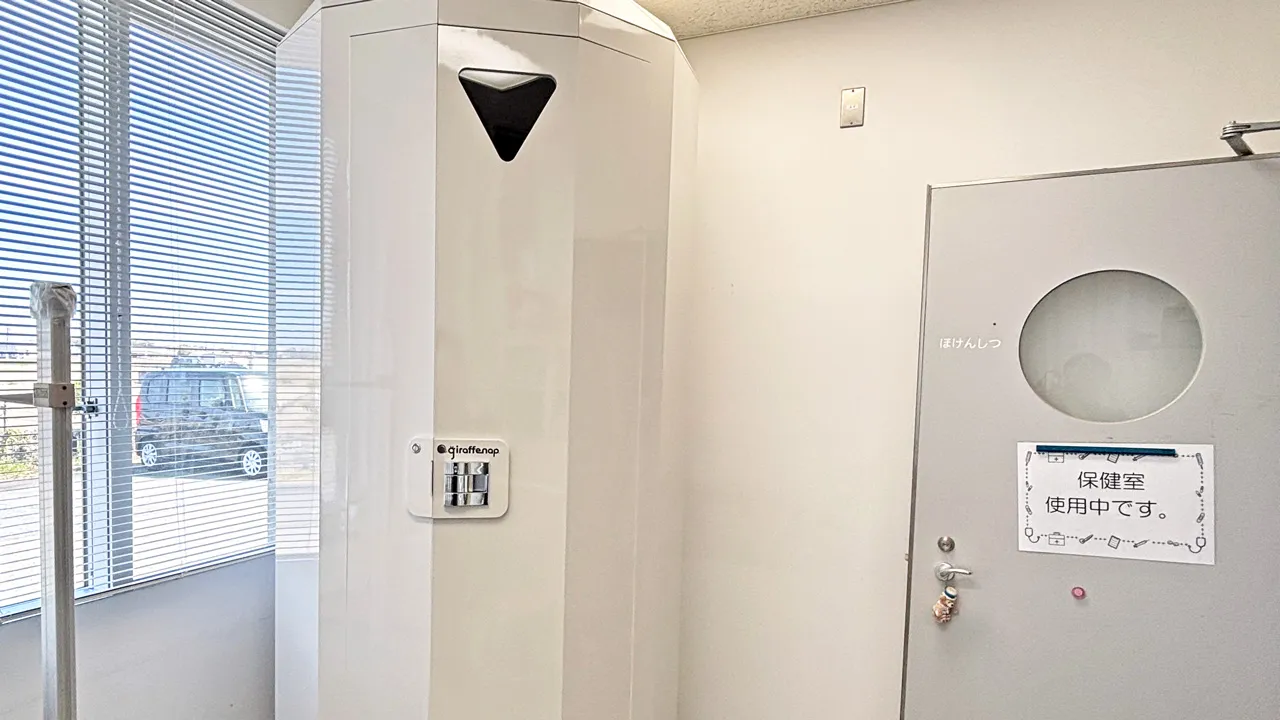
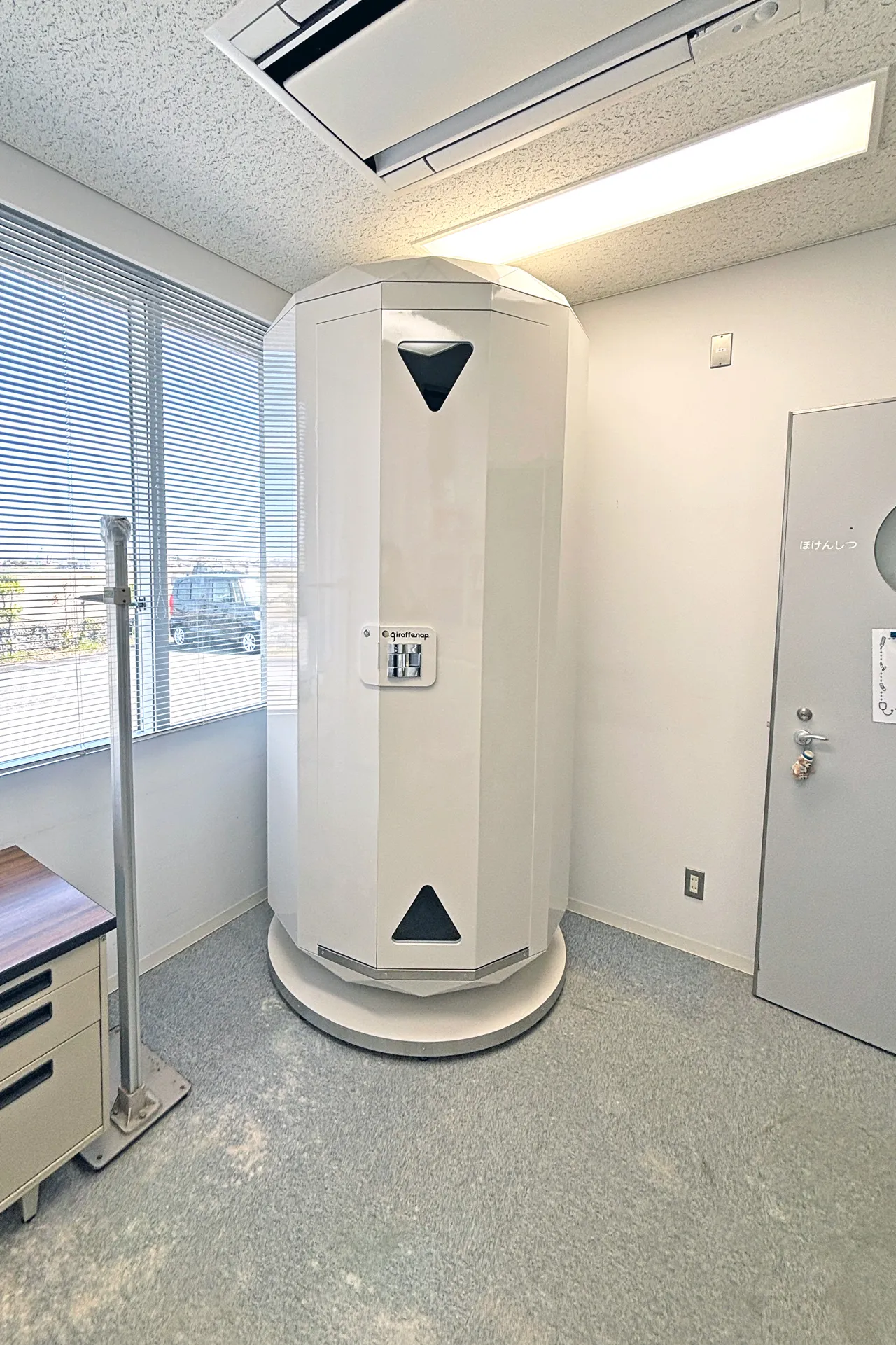
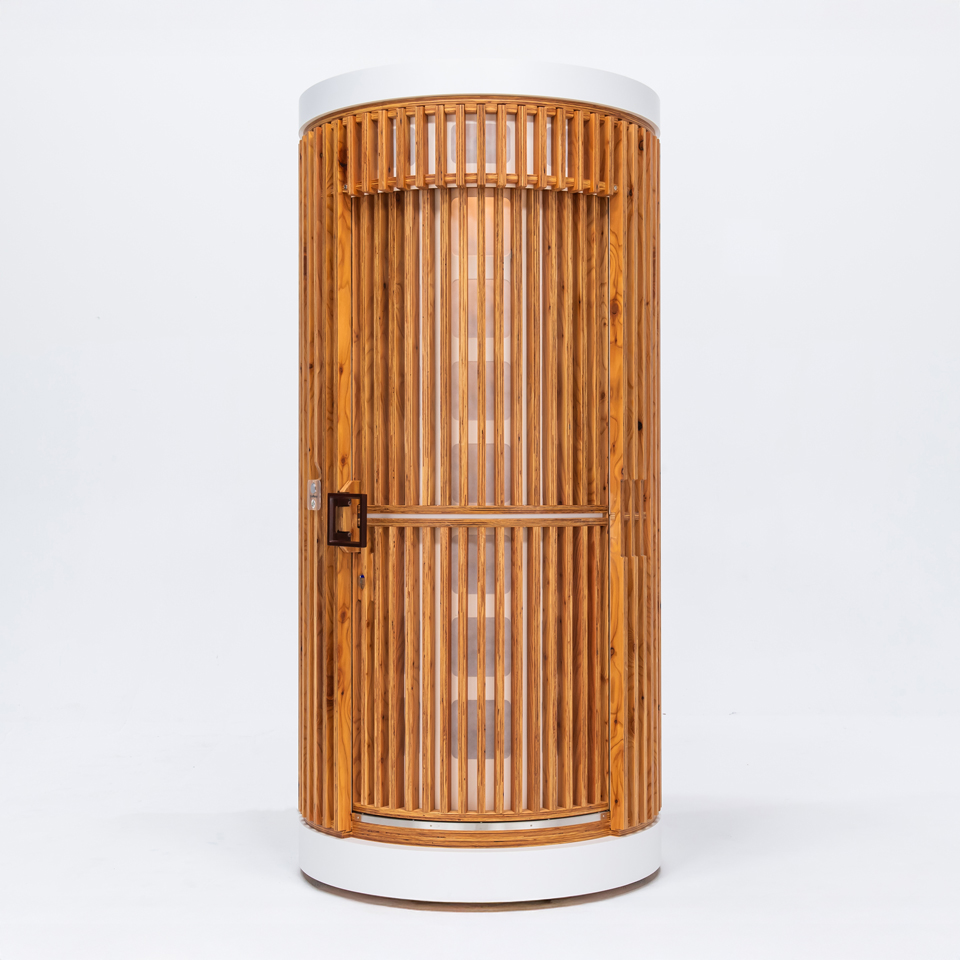
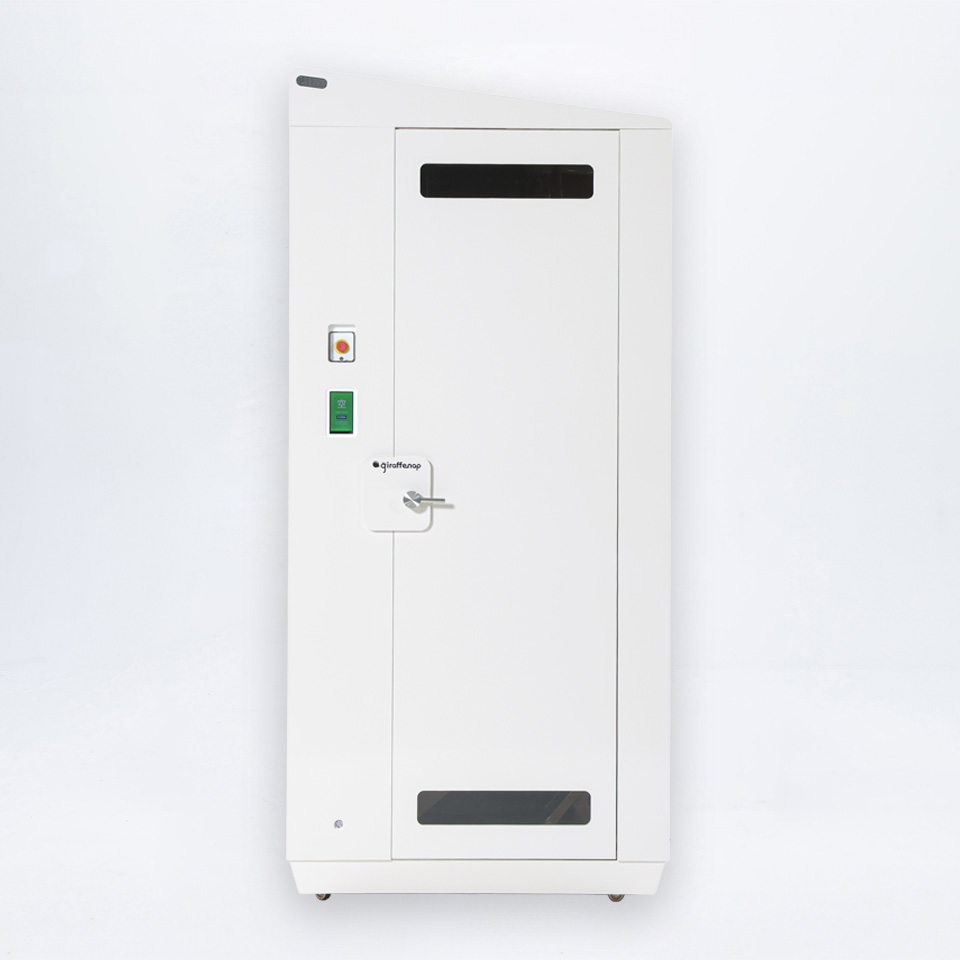
Nagashima Chubu Childcare Center in Kuwana City, Mie Prefecture, recently installed giraffenap, an upright nap pod designed for taking short naps while standing. Two units were installed through Japan’s Corporate Hometown Tax Donation Program.
We spoke with Mr. Hirota of Kuwana City’s Children’s Future Division, who led the project, as well as the director and staff members of the childcare center. They shared what led to the installation and how the pods have been received in practice.
Better Sleep Leads to Better Performance: What Prompted the City to Take Action
Could you tell us what led to the installation?
Mr. Hirota, Children’s Future Division, Kuwana City:
I have always had a strong interest in sleep.
Through my daily work and conversations with people involved in childcare support, I became aware that not only parents but also the staff working on the front lines were facing significant challenges related to sleep and rest.
While researching possible solutions, I came across an article about giraffenap. That was what first prompted us to consider installing the product.
We also looked at several products from other companies, but finding enough space within an existing facility was a challenge.
Most conventional nap products are designed for users to lie down and sleep comfortably. The idea of “sleeping while standing” was highly innovative, but at the same time, it also made a great deal of practical sense.
Above all, its compact footprint made us feel that it could also work in public facilities. We contacted the company right away.
Was introducing this kind of new equipment difficult for a local government?
Mr. Hirota, Children’s Future Division, Kuwana City:
Thanks to the considerable understanding and support of Mr. Yamaguchi, President of Koyoju Plywood Co., Ltd., we were able to install two units through Japan’s Corporate Hometown Tax Donation Program.
Our senior leadership also quickly understood the idea of improving work performance through self-care, so the decision-making process was relatively smooth.
“Lying Down Can Feel Awkward”: The Reality of Breaks in Childcare Settings
What was the break environment like before the nap pods were installed?
Director:
We had always strictly enforced the rule that staff members must step away from childcare duties and take their full one-hour break.
However, because the center is open from 7:00 a.m. to 7:00 p.m. and there are always children who need attention, it is structurally difficult for everyone to take a break at the same time. In practical terms, the entire staff cannot simply stop working and take their breaks together at a fixed time every day.
We always make sure that each staff member has time for a break, but everyone here is extremely dedicated.
It can be difficult for them to completely step away from work. Even during their breaks, they may find themselves doing paperwork or worrying about the children.
We do have a proper tatami-floored break room where staff can lie down. In reality, however, lying down to sleep while other staff members are relaxing in the same room can take a little courage.
Even when everyone has a good relationship, people still tend to hold back out of consideration for others.
Before the pods were installed, we often saw staff members sitting at their desks with a blanket over themselves, putting their heads down as they might have done as students, and closing their eyes for just five minutes.
More recently, attitudes among childcare professionals have begun to change. The desire to take a proper one-hour break is stronger than it used to be.
That is precisely why we needed a place where staff could rest without worrying about anyone else—a physical space that clearly communicates, both to those around them and to themselves, “I am stepping away from work right now.”
More Than a Place to Sleep: A Private Space to Be Alone
How have staff members responded after using the nap pods?
Director:
At first, many people were skeptical and asked, “Can you really sleep while standing?”
We encouraged everyone to try it at least once. Afterward, many staff members said that it felt more natural than they had expected and that it was surprisingly easy to sleep in.
One staff member used it for about 15 minutes when experiencing a headache and was delighted to find that their head felt much clearer afterward.
The upright position is also an important feature.
When you lie down, your body can sometimes feel heavy after waking up. With an upright nap, however, it is easier to switch gears after a short break and return to your next task feeling refreshed as soon as you wake up.
I think this kind of moderate, short nap is particularly well suited to childcare settings.
Childcare center staff member:
To be honest, it felt unfamiliar at first. I wondered, “How am I supposed to sleep in here?”
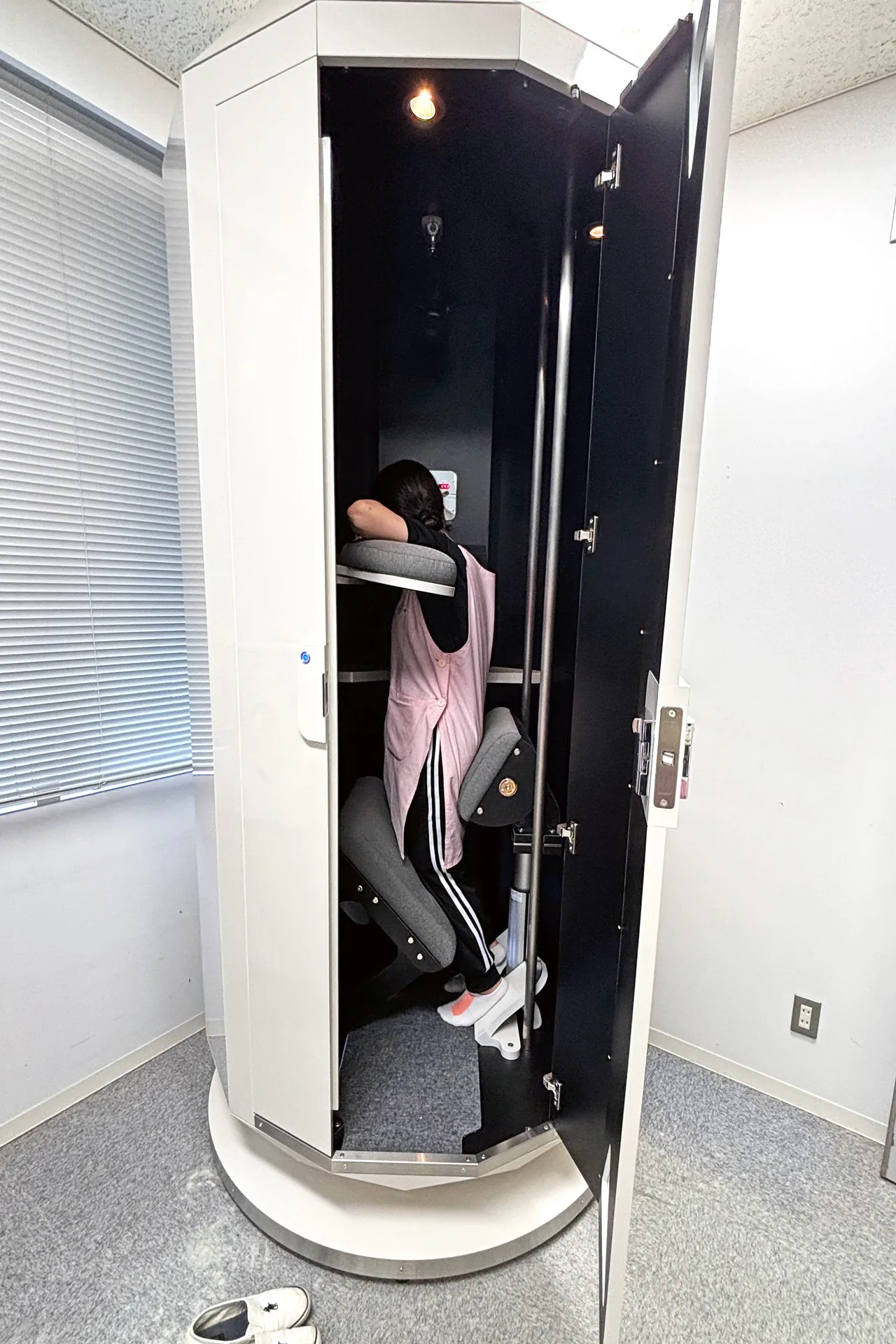
Other staff members showed me the right posture, and I experimented until I found an angle that worked for me. Once I did, I was able to sleep comfortably without feeling awkward. After you learn how to use it, you can get a proper rest.
Another major benefit is having a physically private space, whether or not you actually sleep.
You can close the door, block out the sounds around you, and spend some time completely alone.
Being able to enter “a world of your own” allows you to step away from the tension of work, even if only for a short time.
Challenges at the Center and Future Prospects
Could you tell us about any operational challenges and what you hope to see in the future?
Director:
The height and angle that feel comfortable vary slightly from person to person.
If the pod could save individual settings for each user, staff members would be able to settle into their breaks even more smoothly. We would like to continue creating an environment where everyone can transition into rest naturally and comfortably.
At present, the pods have been installed at only two of the city’s eight public childcare centers. I hope initiatives like this will eventually expand to other centers as well.
Childcare is an exceptionally busy profession. If taking a high-quality break becomes a normal part of the workday, I hope it will give every staff member greater physical and emotional breathing room.
Mr. Hirota, Children’s Future Division, Kuwana City:
Some childcare centers may have difficulty installing the pods because of physical space limitations. Nevertheless, Kuwana City intends to continue improving working conditions.
We also hope that new initiatives like this will support the recruitment of childcare professionals and help communicate the quality of our employee benefits.
We will continue listening to staff members and exploring ways to create an even better working environment.
Thank you very much for taking the time to speak with us.
We hope that everyone at Nagashima Chubu Childcare Center will continue to care for the children in good health and well-being.
Contact Us About Introducing giraffenap
Contact us to discuss installing giraffenap or to request further information.
We also welcome inquiries about installation examples and ways to use Japan’s Corporate Hometown Tax Donation Program.
View other case studies
How Nap Pods Transformed Break Culture at a Childcare Center – Workplace Reform in Kuwana City Made Possible Through Japan’s Corporate Hometown Tax Donation Program
Improving working conditions for childcare professionals has bec...
Avoiding Deep Sleep Makes It Easier to Reset~How Professional Volleyball Team VOREAS HOKKAIDO Uses the giraffenap~
VOREAS HOKKAIDO joined the SV.LEAGUE—the highest tier of profess...


